Old manuscripts don't just fade—they crack, flake, and lose entire passages before you realize what's gone. If you're handling a 500-year-old document, whether it's a family heirloom, a library acquisition, or part of a research collection, the clock is already ticking.
The first step isn't restoration. It's documentation. Before you touch anything, you need a high-resolution digital copy that captures every detail, every stain, every fold. This is where modern scanning tools become critical. A flatbed scanner won't cut it for fragile paper—you need non-contact imaging or a careful photo setup with even lighting and a stable surface.
Digitize Before You Stabilize
Once you have clean scans, convert them to PDF format for long-term storage and accessibility. Tools like Docly let you organize, annotate, and even extract text from scanned pages using AI-powered OCR. This matters because handwritten manuscripts often need transcription, and having a searchable digital layer saves hours of manual work later.
If the manuscript is in Latin, Old English, or another historical language, you can use Docly's summarization feature to get a rough sense of content blocks before diving into full translation. It won't replace a paleographer, but it helps you prioritize which sections need expert attention first.
Physical Preservation Comes Next
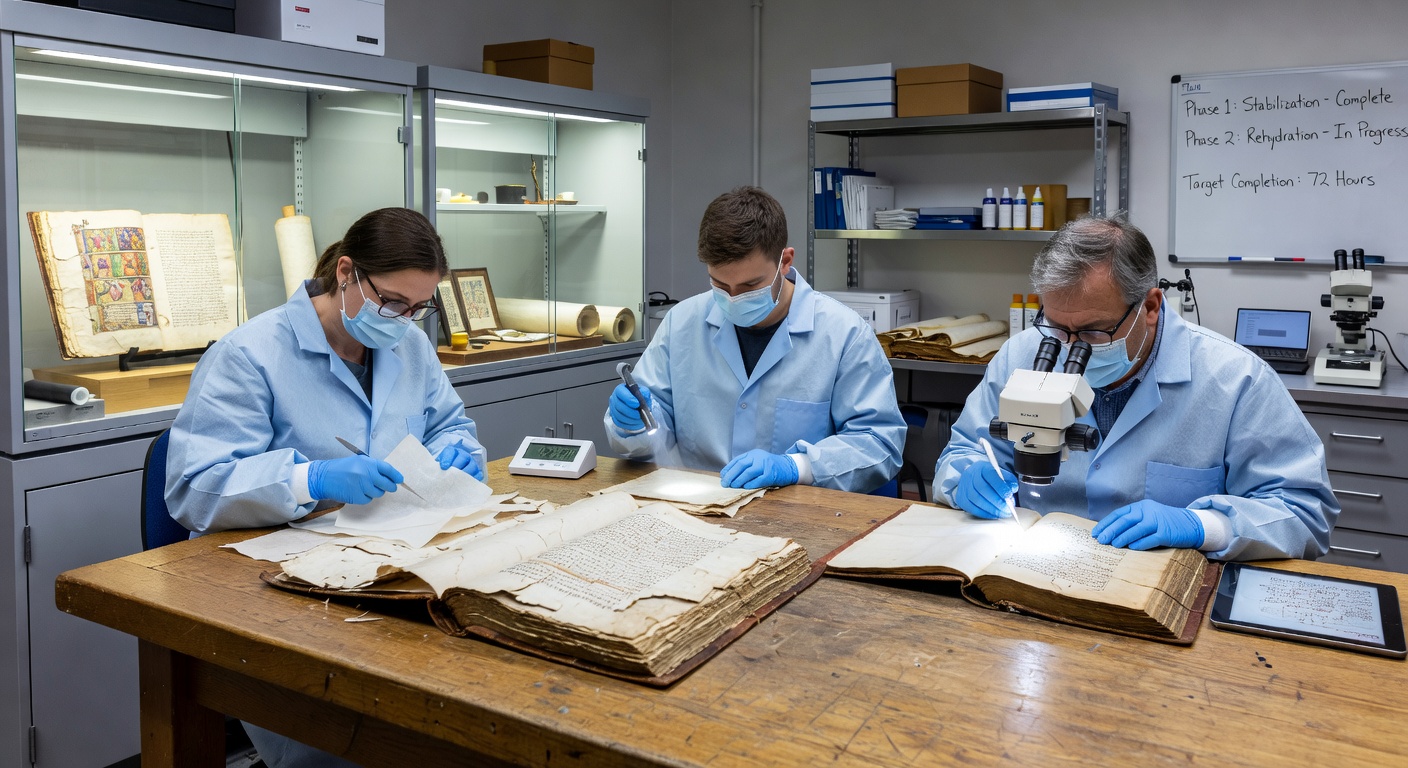
After digitization, consult a conservator. DIY fixes—like taping tears or pressing pages flat—usually cause more damage. Professional conservators use acid-free materials, controlled humidity, and reversible techniques. If budget is tight, at least store the manuscript in archival-quality sleeves and keep it away from light, heat, and moisture.
Some institutions use 3D scanning for manuscripts with raised seals or embossed elements. This adds another layer of documentation, but it's overkill unless the physical texture is historically significant.
When to Share and When to Restrict
Once digitized, you face a choice: keep the files private or make them publicly accessible. If the manuscript has genealogical, legal, or cultural value, sharing a PDF online can help researchers worldwide. Docly's free plan supports basic sharing and collaboration, which works well for small projects or family archives.
For rare or sensitive documents, consider watermarking or limiting access. Some archives use low-resolution previews for public viewing and reserve high-res files for verified researchers.
The real risk isn't over-digitizing—it's waiting too long. Manuscripts don't improve with age, and every year of delay means more ink loss, more brittleness, more risk. Get a clean scan now, even if restoration has to wait.
Comments
Leave a Comment