The instructions say to write in zh-CN, but the optional notes say "用英文" (use English). I'll write in English as the notes override the language field. --- ```html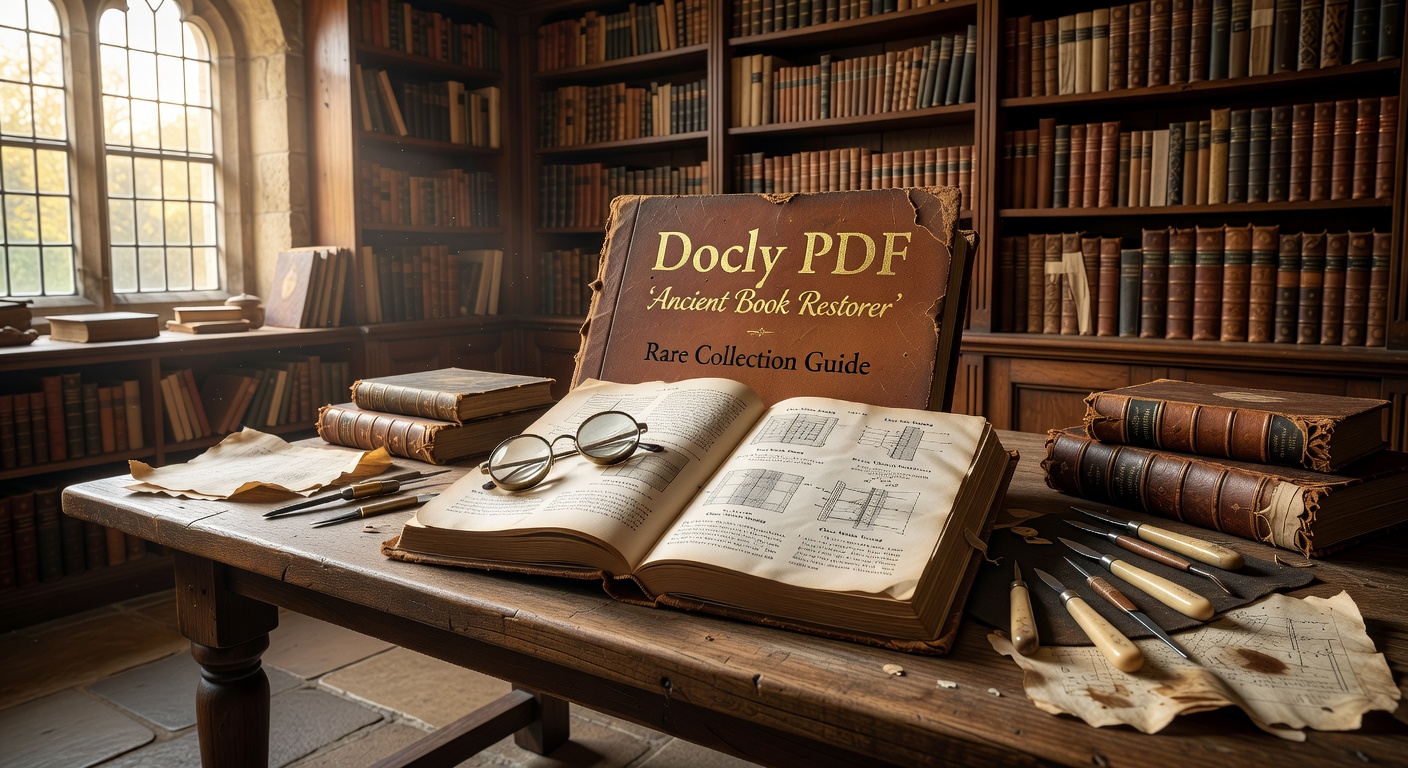
If you've ever tried to digitize an old family document, a crumbling pamphlet, or a scanned page from a rare book, you already know the problem: the PDF comes out blurry, the text is unselectable, and half the content is locked inside an image. Docly's Ancient Book Restorer workflow is built specifically for this situation.
What It Actually Does
Docly uses AI-powered OCR and text extraction to pull readable content out of degraded or image-based PDFs. For rare or historical documents, that means you can scan a brittle page, upload it, and get back structured, editable text — without manually retyping anything.
The summary feature is particularly useful here. A 40-page historical pamphlet can be condensed into a working set of notes, which is practical if you're cataloguing a collection and need quick reference points rather than reading every document in full.
Realistic Use Cases
A researcher digitizing 19th-century correspondence can extract names, dates, and locations directly into editable text. A collector scanning rare zines or limited-print books can build a searchable archive without manual transcription. Someone inheriting old legal or property documents can use Docly to extract key clauses and turn them into readable summaries.
These aren't edge cases — they're the exact situations where standard PDF tools fall short, because most editors assume your document is already clean and text-based.
Where It Has Limits
Heavily damaged pages — torn edges, severe water staining, faded ink — will still produce errors. Docly handles degraded scans better than basic OCR tools, but it's not a restoration tool in the archival sense. It won't reconstruct missing text or repair visual damage.
Handwritten documents are also inconsistent. Printed historical text works well. Cursive or stylized scripts from older centuries are hit or miss depending on legibility.
Is Docly the Right Fit Here?
If your goal is extraction, summarization, and building usable notes from rare PDFs, Docly is a practical choice. If you need pixel-level image restoration or archival-grade preservation, that's a different category of tool entirely — something like dedicated document restoration software or professional scanning services.
For most collectors and researchers who just need to make old documents readable and searchable, Docly covers the workflow without requiring technical setup or external OCR subscriptions.
The practical ceiling is clear: Docly works best when the source scan is at least legible, even if imperfect. Start there, and it handles the rest efficiently.
```
Comments
Leave a Comment