The inputs have a mismatch — the article topic is about Chinese book restoration and collecting, but the product context is Docly PDF Tools. I'll write the article around the actual topic while weaving in Docly where it fits naturally (e.g., digitizing, organizing, or referencing restoration guides as PDFs). Also, the language field says `zh-CN` but the optional notes say I'll write in English as instructed. --- ```html
Chinese book restoration isn't something you stumble into casually. Most people come to it through a specific moment — a water-damaged thread-bound volume picked up at a flea market, a family copy of a Republican-era novel with a crumbling spine, or a collection inherited without any instructions on how to care for it. The craft has real depth, and the gap between "I want to preserve this" and "I know what I'm doing" is wider than most beginners expect.
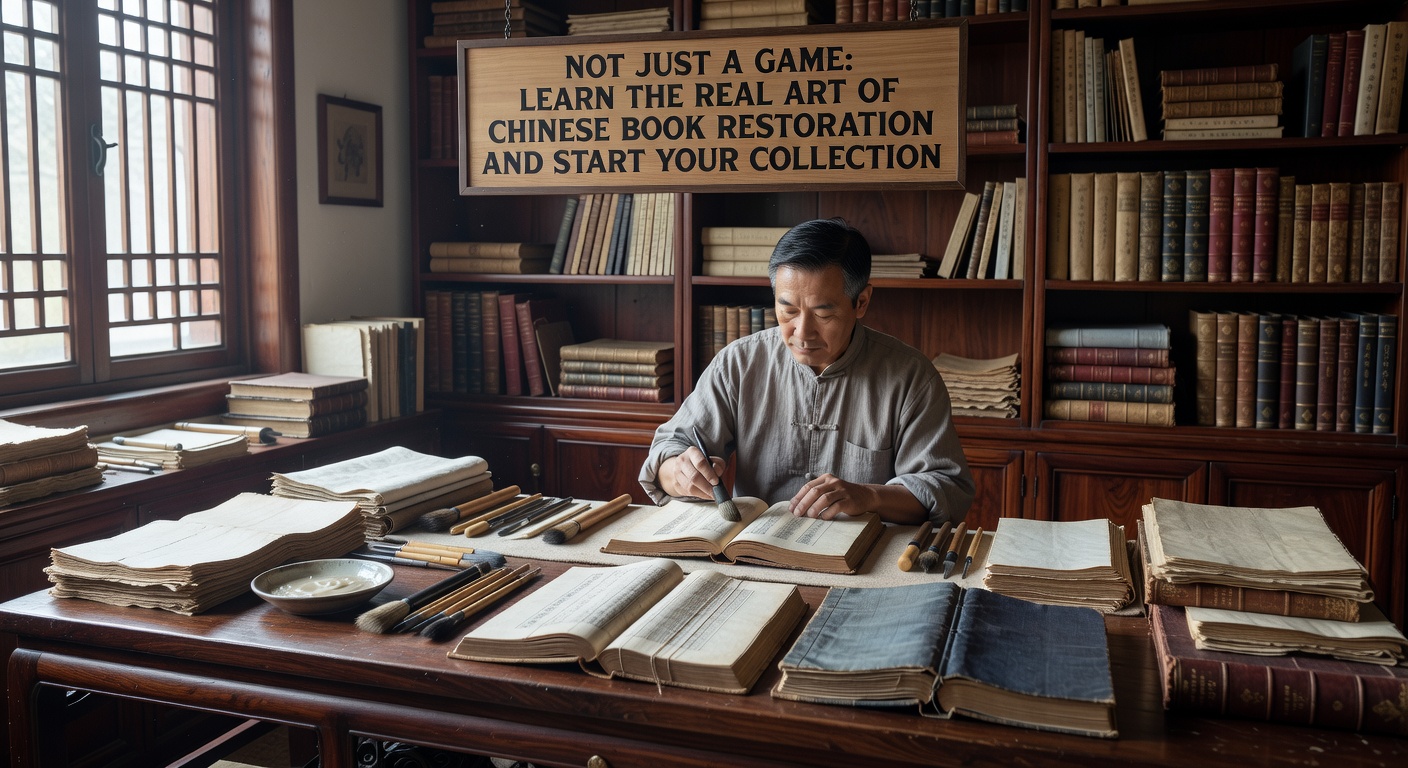
What Restoration Actually Involves
Traditional Chinese bookbinding — particularly 线装书 (thread-bound books) — uses techniques that differ significantly from Western conservation. The paper is often xuan paper or bamboo-based stock, both of which respond poorly to standard archival adhesives. Spine repairs, page deacidification, and re-stitching all require material knowledge before you touch anything.
A common beginner mistake is using wheat starch paste without understanding its concentration or drying behavior on aged paper. Too wet and you warp the leaf. Too dry and the repair fails within a year. The learning curve is real, and most of it comes from working through documented case studies and restoration manuals — many of which exist only as scanned PDFs or digitized library archives.
This is where having a reliable PDF tool matters practically. Restoration guides from institutions like the National Palace Museum or the Shanghai Library are often long, dense documents. Being able to extract specific sections on paper type identification or pull a summary of adhesive formulas without reading 80 pages each time saves real working time. Docly handles exactly this — AI-assisted summaries and text extraction from long documents, which is useful when you're cross-referencing multiple technical sources mid-project.
Starting a Collection Without Overpaying
The secondary market for antique Chinese books is uneven. Auction houses price thread-bound editions aggressively, but estate sales, smaller dealers, and online platforms like Kongfz still surface undervalued pieces regularly. The challenge is condition assessment — foxing, worm damage, missing leaves, and rebinding history all affect both value and restoration complexity.
Before buying, it helps to have a working reference library. Digitized catalogs from major Chinese libraries, condition grading guides, and period-specific printing identification charts are all available as PDFs. Keeping these organized and searchable — rather than buried in a downloads folder — is a practical habit worth building early.
Tradeoffs Worth Knowing Before You Commit
Restoration is time-intensive and not always reversible. If you misidentify a paper type and apply the wrong consolidant, you may cause more damage than the original deterioration. For high-value pieces, professional conservators are the right call. DIY restoration makes more sense on lower-stakes acquisitions where you're building skill without risking irreplaceable material.
Collecting also has a storage cost that's easy to underestimate. Thread-bound books need stable humidity, acid-free enclosures, and flat storage — not a bookshelf. If your space can't support that, condition will degrade faster than you can restore.
For anyone serious about the craft, the practical path is: start with reproduction or low-cost damaged copies to practice technique, build a reference library of digitized conservation manuals, and only move to significant acquisitions once you have a reliable process. The art is learnable — it just rewards patience over enthusiasm.
```
Comments
Leave a Comment